Changing Your Stress Mindset
In our society, we view stress as a bad thing that is best avoided, but the reality is that our bodies are hardwired to experience stress. In fact, our body's stress response is one of the keys to our survival. Our heart races and our respiration increases in order to pump more blood and oxygen to our brains and muscles. In our prehistoric past, this reaction helped us to fight or flee predators and other threats. We might not be wrestling with saber-toothed tigers anymore, but we are probably wrestling with challenging intellectual problems and busy schedules. Our modern problems still need those ancient solutions. More blood and oxygen pumping to the brain results in improved brain function that is better for working through tough problems and keeping track of the many demands on our time. Muscles that are fired up and ready to work will help us tackle the physical demands of stressful periods in our lives.In fact our body reacts in the same way to stress as it does to excitement, and we don't think of excitement as a bad thing, so maybe it won't be that hard to change your mindset about stress.
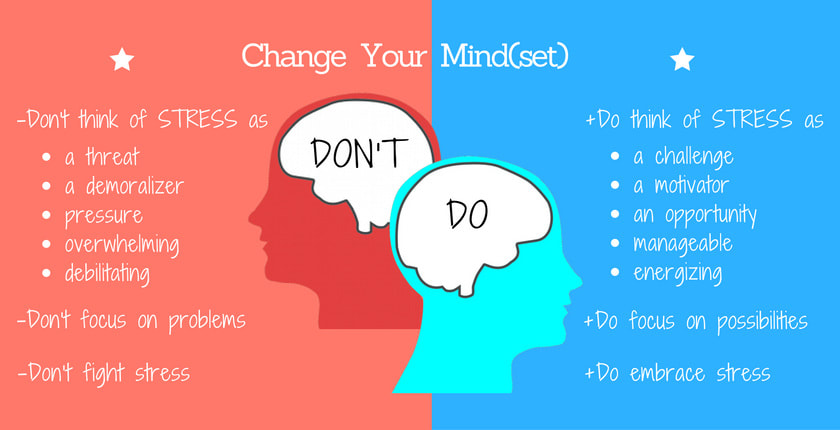
One of the reasons stress can be so harmful to our health is because most of us view stress as a negative thing, so being stressed makes us feel more stressed. We also cope with stress in unhealthy ways, like overeating our favourite comfort foods or skipping the gym to relax in front of the TV. Changing our attitudes about stress can help, but adopting healthy coping strategies is also important, especially if you are dealing with long-term sources of stress, like a sick family member or a tough financial situation.
Research shows that the way we think about stress can influence how we respond to stress, so trying to adopt a more positive mindset about stress is important. Those who view stress as a negative are more likely to respond to stressors with negative emotions (e.g. anger, anxiety, sadness) and to choose unhealthy or unproductive ways of coping with their stress (e.g. avoidance, aggressive behaviour). If you view stress as a positive, you may be more likely to respond to stress in healthy and helpful ways.
For example, two students in the middle of a busy school week might both feel stressed about their upcoming Math test, their oral presentation in English, and their big Science project. The one who sees stress as a bad thing feels overwhelmed. The cry while they do their homework. They take out their frustrations on their friends and family through angry outbursts. And they stay up late watching Netflix to unwind after all the work is finished for the day. The other student, who sees a stressful period as a challenging opportunity, takes a step back from the situation and puts it in perspective. They recognize that it is only one week of their life, not the end of the world. They remind themselves that staying focused and managing their time well during this busy week will help them reach their goals. They make a study schedule, incorporating breaks, exercise and sleep to make sure they stay healthy and get everything done. They are just as busy as the other student all week, but they feel more positively about the situation and how they are coping with it.
A positive attitude towards stress combined with healthy coping strategies is a big part of developing a growth mindset, which is key to becoming the kind of person who successfully reaches their goals in all areas of their lives.
Research shows that the way we think about stress can influence how we respond to stress, so trying to adopt a more positive mindset about stress is important. Those who view stress as a negative are more likely to respond to stressors with negative emotions (e.g. anger, anxiety, sadness) and to choose unhealthy or unproductive ways of coping with their stress (e.g. avoidance, aggressive behaviour). If you view stress as a positive, you may be more likely to respond to stress in healthy and helpful ways.
For example, two students in the middle of a busy school week might both feel stressed about their upcoming Math test, their oral presentation in English, and their big Science project. The one who sees stress as a bad thing feels overwhelmed. The cry while they do their homework. They take out their frustrations on their friends and family through angry outbursts. And they stay up late watching Netflix to unwind after all the work is finished for the day. The other student, who sees a stressful period as a challenging opportunity, takes a step back from the situation and puts it in perspective. They recognize that it is only one week of their life, not the end of the world. They remind themselves that staying focused and managing their time well during this busy week will help them reach their goals. They make a study schedule, incorporating breaks, exercise and sleep to make sure they stay healthy and get everything done. They are just as busy as the other student all week, but they feel more positively about the situation and how they are coping with it.
A positive attitude towards stress combined with healthy coping strategies is a big part of developing a growth mindset, which is key to becoming the kind of person who successfully reaches their goals in all areas of their lives.
Understanding the Role of Stress in Performance
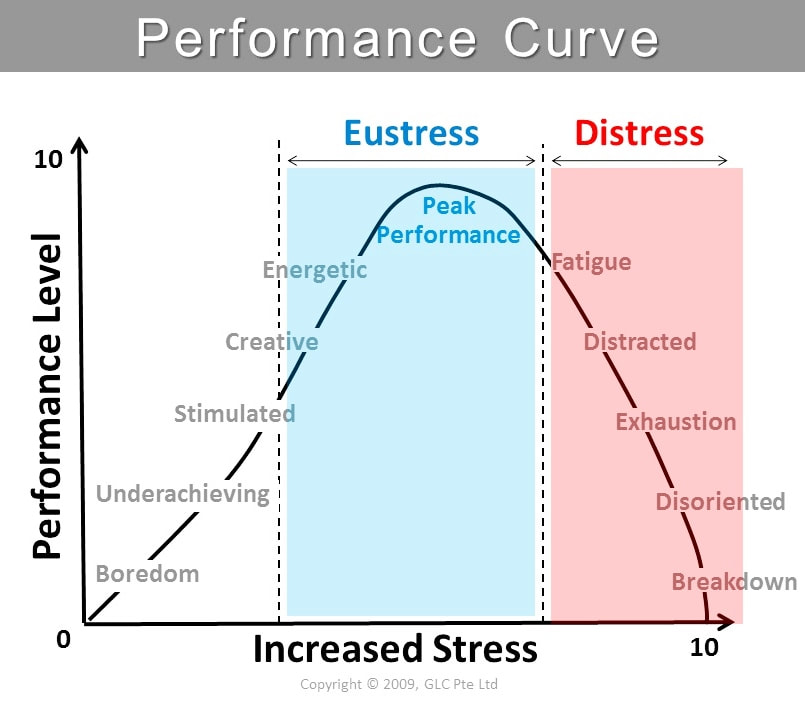
As we can see from this graph, stress is necessary to achieve peak performance. When stress levels are low, we get bored, and we underachieve. Without a little bit of stress to push us in the right direction, it's easy to procrastinate. We don't feel motivated, so we don't perform very well.
As stress levels increase, our performance actually improves. We feel energized and excited by the challenge. The added stress stimulates our creativity and helps us problem solve. When stress levels are just right, we perform better and accomplish more.
When it comes to stress, the trick is to manage it, so we don't become overwhelmed. If stress levels get too high, performance is negatively impacted. We can avoid this problem by developing good strategies that help manage our time and our emotions, so we can stay in the peak performance zone.
As stress levels increase, our performance actually improves. We feel energized and excited by the challenge. The added stress stimulates our creativity and helps us problem solve. When stress levels are just right, we perform better and accomplish more.
When it comes to stress, the trick is to manage it, so we don't become overwhelmed. If stress levels get too high, performance is negatively impacted. We can avoid this problem by developing good strategies that help manage our time and our emotions, so we can stay in the peak performance zone.
